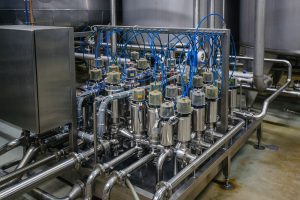

Data center growth creates demand far beyond the data center facility itself.
OEMs, cooling equipment manufacturers, mechanical suppliers, fabrication shops, contractors, and facility teams all support the systems behind data center construction and operation.
Many of those companies need reliable compressed air, nitrogen generation support, air treatment, piping, audits, service, and maintenance.
Compressor Maintenance Co. supports the companies and systems around data center projects with compressed air systems, nitrogen-related support, air treatment, piping, compressor rooms, audits, parts, service, and emergency support.
Through The Conrad Company portfolio, CMC also connects customers with sister-brand support for process instrumentation, 80/20 aluminum extrusion, UL 508A control panels, CPC connectors, fabrication, machining, hydraulic repair, automatic lubrication, and fire suppression.
CMC supports the OEMs, manufacturers, suppliers, contractors, and facility teams tied to data center work with compressed air, nitrogen generation support, service, audits, air treatment, piping, parts, and maintenance.
That includes support for companies that need:
The goal is simple: help the companies around data center projects keep production, testing, and facility support systems running reliably.
Many data center opportunities happen before the facility is built.
Engineering firms, general contractors, OEMs, and equipment manufacturers often influence the systems that eventually support the project.
That means the opportunity is not only the data center itself. It is also the supply chain around the build.
CMC supports companies involved in data center infrastructure, including:
These companies often need dependable compressed air and nitrogen support for testing, fabrication, controls, tools, equipment, and facility operations.
OEMs and manufacturers tied to data center work may use compressed air throughout production, testing, and assembly.
Common compressed air applications include:
The right system depends on pressure, flow, duty cycle, air quality, operating schedule, storage, piping, and future growth.
CMC helps review compressed air demand so the system fits the work being done instead of oversizing around guesswork.
Not every data center-related manufacturer needs the same type of air.
Some companies need low-pressure plant air for tools, actuators, controls, and production support. Others need higher-pressure compressed air for testing, fabrication, validation, or specialty equipment.
CMC helps facilities evaluate:
This helps OEMs and suppliers build a compressed air system around actual production needs.
Nitrogen may be used by manufacturers and suppliers supporting data center infrastructure for pressure testing, purging, blanketing, fabrication support, component validation, or process support.
On-site nitrogen generation starts with compressed air. If the compressed air is wet, dirty, oily, unstable, or poorly treated, the nitrogen system can suffer.
CMC supports nitrogen-related applications with:
For facilities that need packaged air or gas systems, CMC also supports containerized compressor rooms that may include compressed air, nitrogen generation equipment, oxygen generation equipment, vacuum equipment, treatment components, tanks, piping, controls, and fire suppression.
Some data center-related manufacturers and suppliers need more than standard plant air.
Cooling equipment manufacturers, pressure testing operations, and large production environments may need higher-volume compressed air, oil-free air, or engineered compressor systems.
CMC helps review larger compressed air requirements tied to:
For larger-volume oil-free air needs, CMC also supports centrifugal compressor options, including FS-Elliott, where the application calls for higher capacity and clean compressed air.
A compressed air audit helps OEMs, manufacturers, suppliers, and facility teams understand how their system performs under real operating conditions.
CMC reviews the system to identify:
A compressed air audit is especially useful before expanding production, adding a new line, supporting a data center-related contract, installing nitrogen generation, or buying a larger compressor.
Data center-related manufacturers often need clean, dry, stable compressed air.
Moisture, oil, particulates, and pressure drop can affect tools, valves, instruments, test equipment, nitrogen generators, and production equipment.
Compressed air treatment may include:
CMC reviews compressed air treatment needs based on air quality, nitrogen generation requirements, compressor type, facility conditions, piping layout, and where the air is used.
Compressed air piping affects pressure, air quality, reliability, and long-term flexibility.
For OEMs and manufacturers supporting data center projects, piping needs to support current demand and future changes. Poor piping design can create pressure drop, leaks, moisture collection, contamination, and wasted compressor capacity.
CMC supports compressed air piping systems for:
A strong piping layout helps facilities avoid using a larger compressor to compensate for a distribution problem.
The right compressor depends on the application.
A cooling equipment manufacturer may need a different system than a fabrication shop, test lab, or finished data center facility.
CMC helps review:
Depending on the application, CMC may recommend rotary screw compressors for continuous air demand, reciprocating air compressors for intermittent air needs, oil-free compressors for sensitive air quality requirements, centrifugal compressors for large-volume oil-free demand, or larger compressed air systems when the demand calls for it.
Compressed air is often one of the most expensive utilities in a facility.
Leaks, excessive pressure, poor controls, dirty filters, pressure drop, and oversized equipment all increase energy use.
For data center-related manufacturers and facility teams, compressed air improvements may support both reliability and savings.
Common energy opportunities include:
Data center compressor selection should start with the application, not horsepower.
Before recommending equipment, CMC reviews:
CMC helps facilities review potential air compressor energy rebates when compressed air improvements reduce verified energy use.
Data center facilities and supporting manufacturers often need to protect valuable indoor square footage.
Production areas, electrical rooms, testing spaces, inventory, mechanical systems, and expansion plans can make compressor room space difficult to manage.
CMC supports containerized compressor rooms for facilities that want to move compressed air, nitrogen, oxygen, or vacuum systems into a dedicated outdoor enclosure.
Containerized compressor rooms help facilities:
These outdoor compressor rooms are not mobile air units. Their purpose is to preserve interior space while giving compressed air, nitrogen, vacuum, or oxygen equipment a dedicated exterior location.
Because Compressor Maintenance Co. is part of The Conrad Company portfolio, data center-related projects can also connect with related technical support when a project extends beyond compressed air.
PennAir supports automation, process instrumentation, controls, framing, fluid power, pneumatics, and connection points for OEMs and industrial facilities.
Relevant support may include:
This can be useful for OEMs, manufacturers, and suppliers building cooling equipment, mechanical skids, test systems, control assemblies, liquid connection points, and support equipment tied to data center infrastructure.
For process instrumentation, valves, actuation, controls, filtration, and heating-related components, CMC can connect customers with PennAir’s expanded technical support.
This may be useful for OEMs and manufacturers working around:
GreasePoint supports automatic lubrication and fire suppression needs for equipment where uptime, safety, and preventive maintenance matter.
Relevant applications may include:
For facilities managing support equipment or outdoor assets, automatic lubrication and fire suppression help protect reliability and reduce preventable downtime.
Direct data center facility service may be handled by national providers in some cases, but compressed air service still matters for the companies and systems around data center infrastructure.
CMC provides compressed air service and parts for:
A proactive maintenance plan helps reduce unexpected downtime, protect air quality, and keep production and facility systems ready.

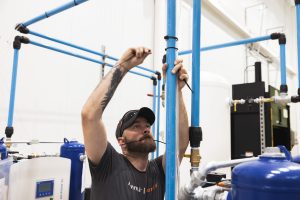
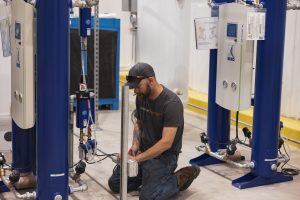
We’re looking forward to working with you. Whether you have questions about products or services, our team is ready to help.
OEMs should review required pressure, required flow, test cycle timing, storage, air quality, piping layout, safety requirements, and future production demand before adding compressed air for testing. These factors help determine whether the application needs standard plant air, higher-pressure air, dedicated storage, or a separate compressor system.
A nitrogen generator needs clean, dry, stable compressed air. Upstream dryers, filters, drains, storage, piping, and condensate management help reduce moisture, oil, and particulate issues before air reaches the nitrogen generator.
A nitrogen generator needs clean, dry, stable compressed air. Upstream dryers, filters, drains, storage, piping, and condensate management help reduce moisture, oil, and particulate issues before air reaches the nitrogen generator.
High-pressure compressed air may be needed for pressure testing, leak testing, validation, fabrication, or specialty production equipment. Lower-pressure air may be enough for tools, actuators, controls, and general plant air.
Pressure drop can come from undersized piping, long pipe runs, leaks, dirty filters, restrictive dryers, poor storage, improper regulators, or demand spikes. Reviewing the full system helps identify whether the issue is caused by the compressor, piping, air treatment, storage, or point-of-use demand.
Yes. A compressed air audit helps determine whether a larger compressor is actually needed or whether the real issue is leaks, pressure drop, poor controls, undersized storage, dirty filters, piping restrictions, or air treatment problems.
Yes. Outdoor containerized compressor rooms help facilities preserve indoor floor space by housing compressors, dryers, filters, tanks, nitrogen generation equipment, piping, controls, and related support components in a dedicated exterior enclosure.
As production demand grows, OEMs may need compressor resizing, added storage, upgraded dryers and filtration, improved piping, leak repair, pressure optimization, nitrogen generation support, preventive maintenance, and energy review. The right improvements depend on actual demand, air quality requirements, testing needs, and future expansion plans.