
A vacuum pump removes air or gas from a sealed space to create vacuum pressure. Vacuum pumps are used in industrial, medical, dental, laboratory, environmental, and process applications.
A vacuum booster increases pumping speed or helps a vacuum system reach operating conditions more efficiently. Boosters are often used when a process needs higher flow or improved vacuum performance.
A vacuum pump creates vacuum by removing air or gas from a system. A blower moves air or gas and may be used for pressure or vacuum applications depending on the system design.
Liquid ring vacuum pumps are used in applications where moisture, vapor, or carryover may be present. They are common in chemical processing, food production, environmental, industrial, and process applications.
A dry rotary vane vacuum pump uses vanes to create vacuum without oil in the pumping chamber. These pumps are often used where low maintenance, quiet operation, and clean performance are important.
A rotary claw vacuum pump uses non-contact claw-shaped rotors to create vacuum. Dry rotary claw systems are often used in surgical, laboratory, WAGD, industrial, and pressure applications.
Oil-sealed vacuum pumps use oil or seal fluid in the pumping process, while dry vacuum pumps do not use oil in the pumping chamber. The right choice depends on the application, vapor load, cleanliness requirements, and maintenance expectations.
Start with required vacuum level, flow rate, gas or vapor load, moisture risk, particulate exposure, oil-free or oil-sealed requirements, noise, controls, maintenance expectations, and available space.
Yes. Vacuum pumps need routine maintenance such as filter replacement, oil or seal fluid checks, vane inspection, belt inspection, leak checks, control review, and general system performance checks.
Vacuum pumps are used in medical, dental, laboratory, environmental remediation, chemical processing, food production, packaging, industrial production, vacuum conveying, and many other process applications.
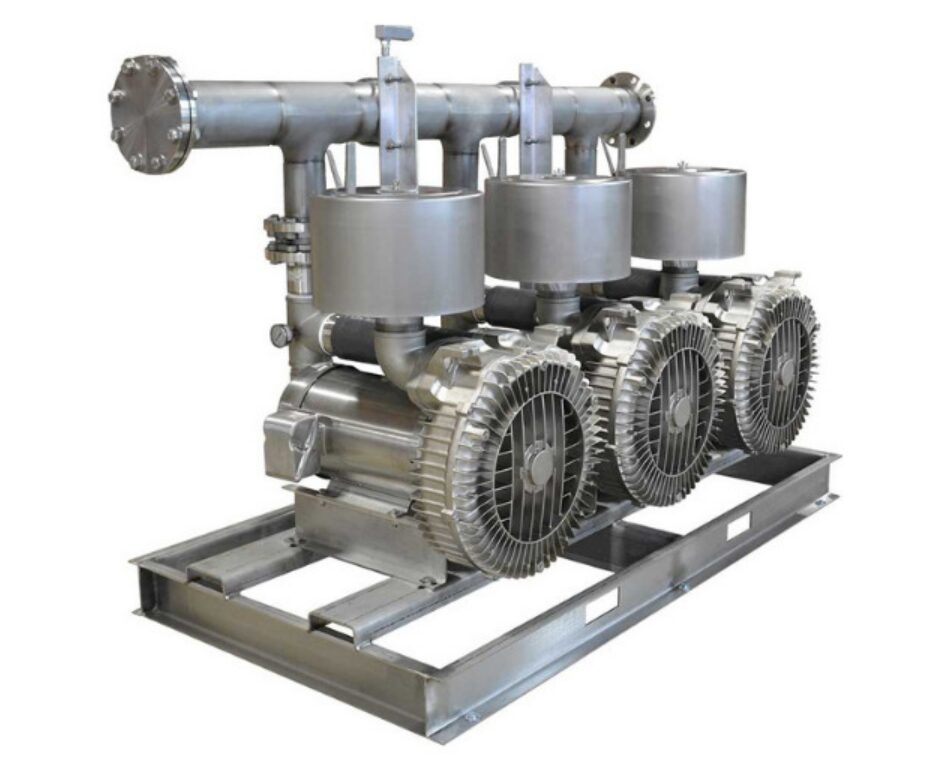
This blower offers vacuum or pressure configurations. A PC based control center simplifies operation. This system featured mechanical seals. Special coatings available include electro-less nickel and Teflon. The magnetic drives were selected to enhance leak tightness between the motor and pump housing. Specialized instrumentation, an explosion proof motor, and high temperature bearings round out the features.
Vacuum pumps and boosters support systems that need controlled vacuum, pressure, airflow, evacuation, or process support. From industrial production and environmental remediation to surgical, dental, laboratory, food production, and chemical processing applications, the right vacuum system helps protect performance, reliability, and uptime.
Compressor Maintenance Co. helps facilities choose, service, and support vacuum pumps, boosters, blowers, and complete vacuum systems that fit the application, flow requirement, operating environment, and maintenance plan.
We support vacuum pump and booster needs with trusted suppliers such as AirTech, including liquid ring vacuum systems, dry rotary vane systems, dry rotary claw systems, tank-mounted systems, dental oral evacuation systems, pressure systems, and custom blower packages.
Vacuum pumps remove air or gas from a system to create vacuum pressure. Vacuum boosters increase pumping speed, improve system performance, or help a vacuum system reach operating conditions more efficiently.
Vacuum pumps and boosters are used in applications such as:
The right vacuum solution depends on the required vacuum level, flow rate, gas or vapor load, operating temperature, contamination risk, maintenance expectations, and whether the system needs simplex, duplex, triplex, or multiplex operation.
Vacuum systems need to be matched to the process. A system that is undersized may struggle to maintain vacuum. A system that is oversized may waste energy, increase cost, and create unnecessary maintenance demands.
A properly selected vacuum pump or booster helps facilities maintain the required vacuum level, improve process reliability, support consistent flow or evacuation, reduce downtime, improve energy performance, protect equipment from moisture or particulates, and match the system to the application instead of forcing a generic solution.
We help customers compare vacuum technologies, package configurations, and service needs before recommending a system.
CMC supports AirTech vacuum systems for surgical, dental, laboratory, environmental remediation, industrial, and specialty applications.
AirTech systems are designed around customer-specific needs, including simplex and multiplex configurations. Multiplex systems use smaller pumps in a lead-lag sequence, so only the capacity needed at a given time operates. This helps support efficiency and provides built-in backup if one pump needs service.
AirTech vacuum systems are often a strong fit when an application needs:
Liquid ring vacuum pumps are widely used in applications where vapor, moisture, or carryover may be present. They use a liquid seal to create compression and move gas through the system.
CMC supports AirTech liquid ring vacuum system options for industrial and process applications where reliability, moisture handling, and durable operation matter.
Liquid ring vacuum systems are often a strong fit when an application needs:
Non-contact dry rotary claw systems support vacuum or pressure applications without internal contact between the pumping elements.
These systems are often used in surgical, waste anesthetic gas disposal, laboratory, and industrial applications. AirTech dry rotary claw systems may include touch screen controls, variable speed drives, automated PC-based controls, and building automation system interface capabilities.
Dry rotary claw systems are often a strong fit when an application needs:
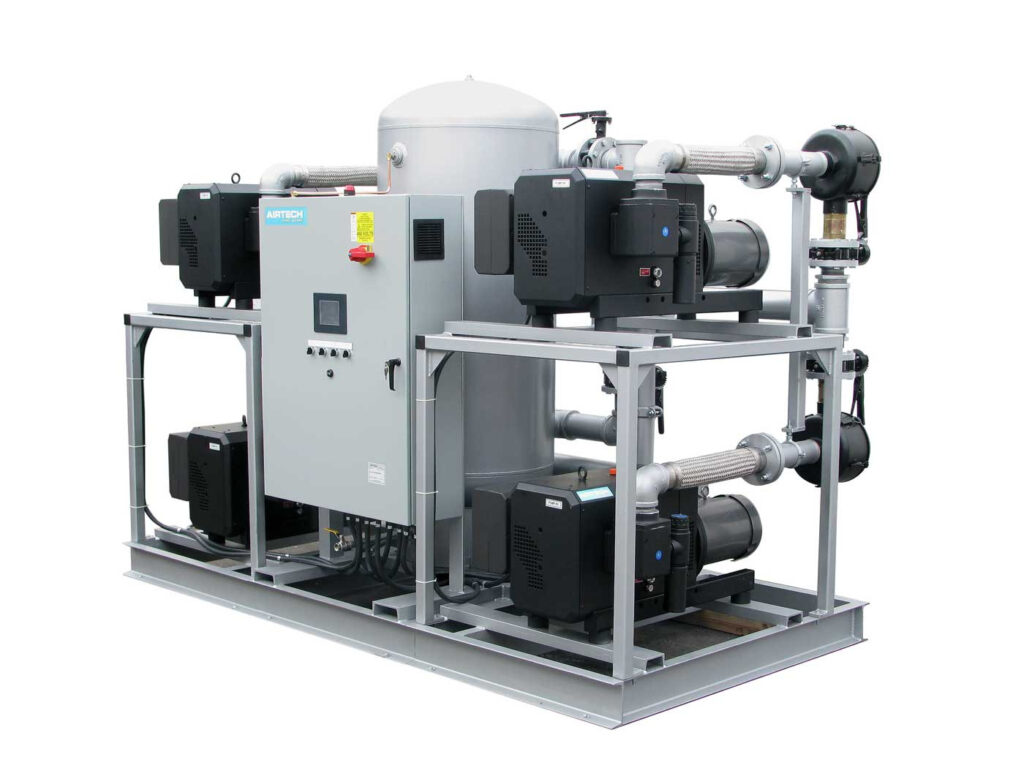
Self-contained recirculating liquid ring systems provide an alternative to oil-flooded pumps, dry vane pumps, or non-contact pumps in applications where vapor, carryover, or particulates need to be considered.
AirTech systems are designed in simplex to multiplex configurations and may be tank-mounted, stack-mounted, or base-mounted depending on the space and application.
These systems are often a strong fit when an application needs:
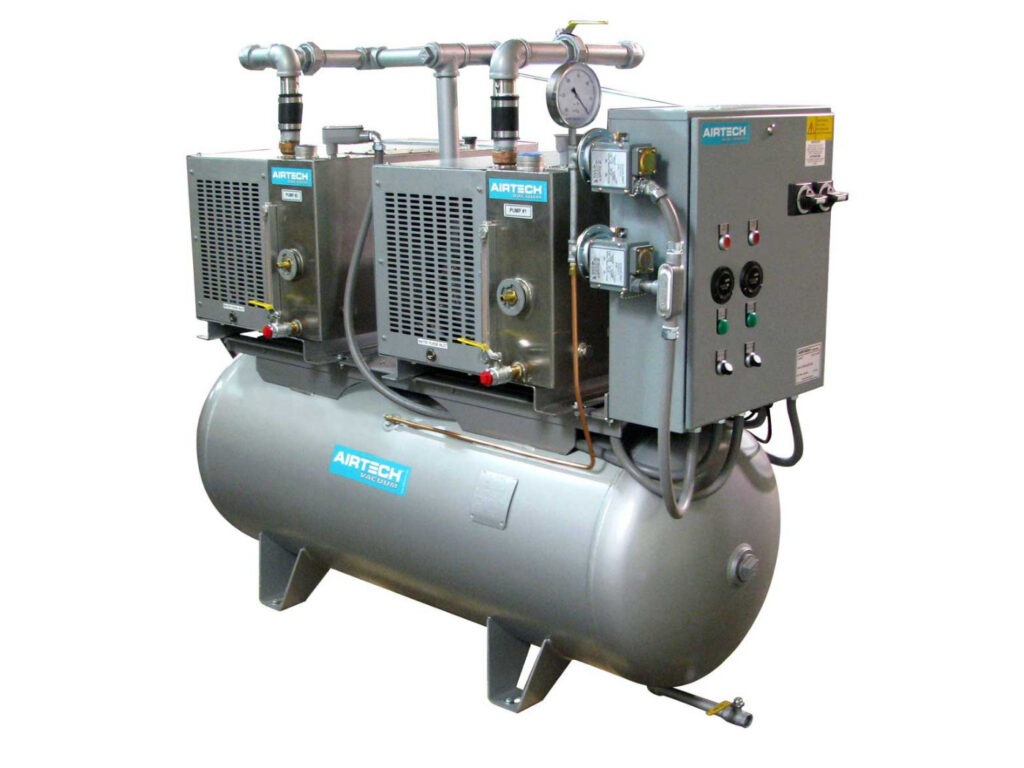
Dry rotary vane vacuum systems use vanes to create vacuum without oil in the pumping chamber. These systems are often selected for applications where low maintenance, quiet operation, and compact installation matter.
AirTech dry rotary vane systems are often used in surgical centers and small industrial applications.
Dry rotary vane systems are often a strong fit when an application needs:
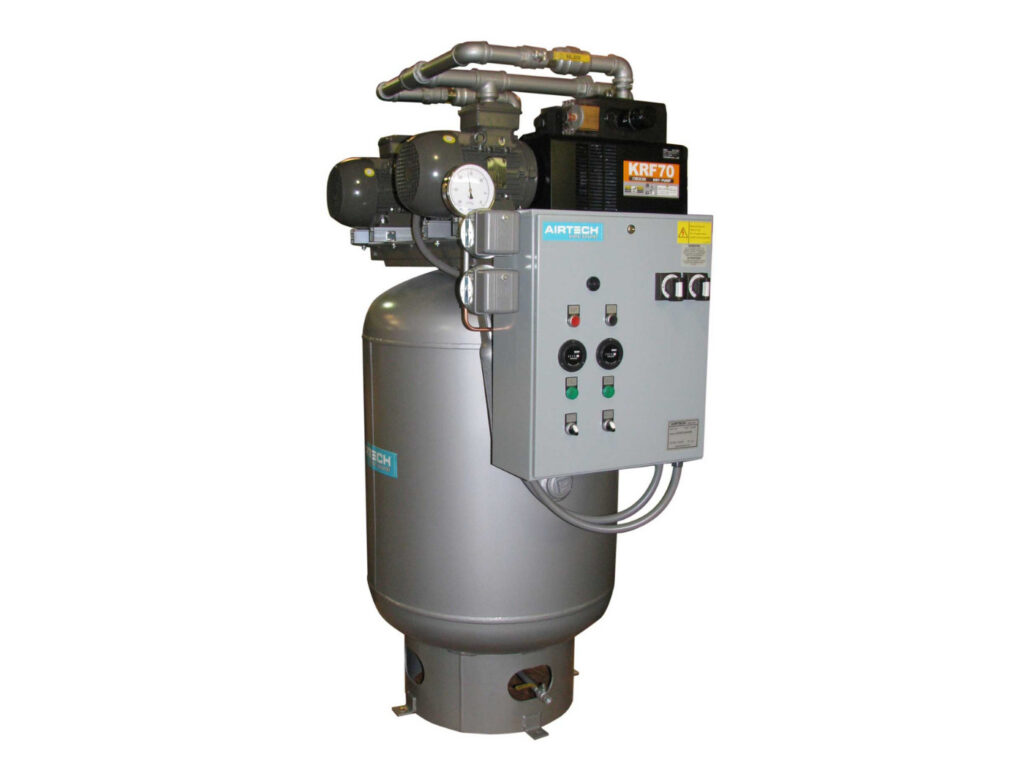
Tank-mounted rotary vane systems have been used for decades across industrial, surgical, dental, laboratory, and specialty vacuum applications.
These systems are available in space-saving configurations such as vertical tank-mounted, horizontal tank-mounted, expandable stacked, or base-mounted layouts.
Tank-mounted rotary vane vacuum systems are often a strong fit when an application needs:
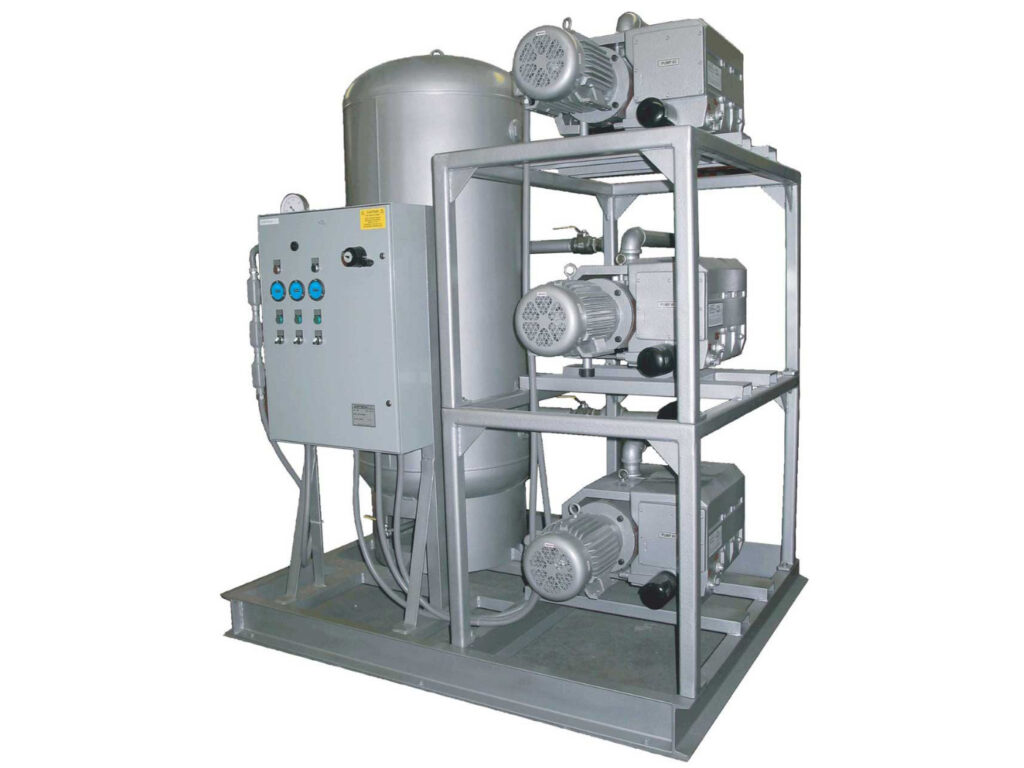
Dental oral evacuation systems support vacuum needs in dental environments where quiet operation, reliability, and low-maintenance design matter.
AirTech dental oral evacuation systems use regenerative blower technology with no contacting parts and no need for oil or water. These systems may include built-in washdown capability and can be configured in simplex to multiplex layouts.
Dental oral evacuation systems are often a strong fit when an application needs:
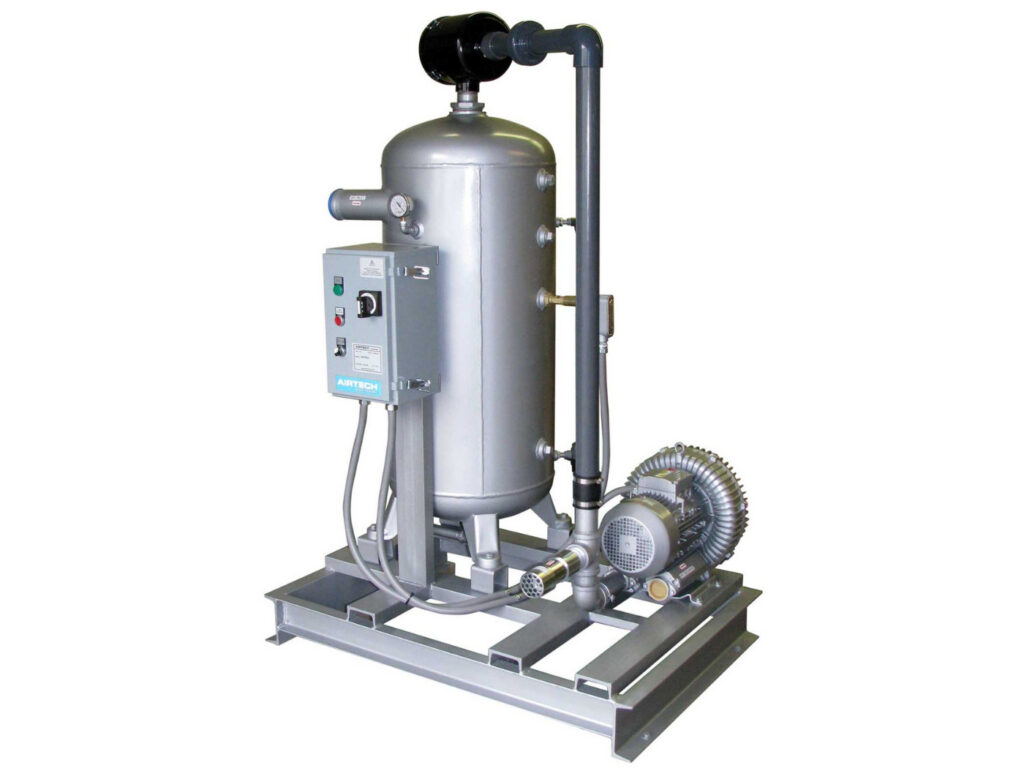
Some applications need more than an off-the-shelf vacuum pump package.
CMC supports custom blower and triplex system needs for facilities that require vacuum or pressure configurations, specialized instrumentation, mechanical seals, explosion-proof motors, high-temperature bearings, coatings, or enhanced leak-tight operation.
Custom blower systems are often a strong fit when an application needs:
We help review operating conditions, safety requirements, control needs, temperature, gas handling, and system performance expectations before recommending a custom configuration.
Medical, dental, and laboratory environments need vacuum systems that are dependable, properly configured, and easy to maintain.
Vacuum systems in these settings may support surgical suction, waste anesthetic gas disposal, dental oral evacuation, laboratory processes, or facility vacuum requirements.
Important considerations include vacuum level, flow rate, noise, maintenance access, backup capacity, infection control or washdown requirements, building automation integration, system redundancy, and space constraints.
CMC helps customers evaluate whether dry rotary claw, dry rotary vane, regenerative blower, or liquid ring technology fits the application.
Industrial vacuum applications often involve tougher operating conditions than medical or laboratory systems. Moisture, vapor, particulates, temperature, duty cycle, and contamination risk all affect equipment selection.
Industrial applications may include:
We help match the vacuum system to the process, environment, and maintenance expectations.
Vacuum pump selection depends on more than horsepower or pump size. The process itself determines which technology fits best.
Before recommending a system, we review:
This helps us recommend a vacuum solution that fits the application instead of selecting by product category alone.
CMC works with trusted suppliers to support vacuum pump, booster, blower, and system needs across industrial, medical, dental, laboratory, environmental, and process applications.
Relevant supplier support includes:
We help match supplier options to the required vacuum level, flow rate, process conditions, space requirements, controls, and maintenance expectations.
Vacuum systems need regular service to protect reliability and performance.
Maintenance may include filter replacement, oil or seal fluid checks, vane inspection, belt inspection, motor checks, leak checks, control review, bearing inspection, drain review, and general system performance monitoring.
A strong service plan helps reduce downtime, extend equipment life, and keep vacuum systems ready for the applications that depend on them.
For broader support, visit CMC’s compressed air service and parts page.
Some vacuum pumps require lubricants, seal fluids, filters, vanes, gaskets, belts, couplings, and replacement components to keep operating reliably.
CMC supports vacuum pump maintenance needs with related lubricants and chemicals, compressed air accessories, and service support.
For oil-sealed and oil-flooded systems, the right lubricant helps protect the pump, reduce wear, support heat control, and extend service life.
Vacuum pumps and boosters support systems that need controlled vacuum, pressure, airflow, evacuation, or process support. From industrial production and environmental remediation to surgical, dental, laboratory, food production, and chemical processing applications, the right vacuum system helps protect performance, reliability, and uptime.
Compressor Maintenance Co. helps facilities choose, service, and support vacuum pumps, boosters, blowers, and complete vacuum systems that fit the application, flow requirement, operating environment, and maintenance plan.
We support vacuum pump and booster needs with trusted suppliers such as AirTech, including liquid ring vacuum systems, dry rotary vane systems, dry rotary claw systems, tank-mounted systems, dental oral evacuation systems, pressure systems, and custom blower packages.
Vacuum pumps remove air or gas from a system to create vacuum pressure. Vacuum boosters increase pumping speed, improve system performance, or help a vacuum system reach operating conditions more efficiently.
Vacuum pumps and boosters are used in applications such as:
The right vacuum solution depends on the required vacuum level, flow rate, gas or vapor load, operating temperature, contamination risk, maintenance expectations, and whether the system needs simplex, duplex, triplex, or multiplex operation.
Vacuum systems need to be matched to the process. A system that is undersized may struggle to maintain vacuum. A system that is oversized may waste energy, increase cost, and create unnecessary maintenance demands.
A properly selected vacuum pump or booster helps facilities maintain the required vacuum level, improve process reliability, support consistent flow or evacuation, reduce downtime, improve energy performance, protect equipment from moisture or particulates, and match the system to the application instead of forcing a generic solution.
We help customers compare vacuum technologies, package configurations, and service needs before recommending a system.
CMC supports AirTech vacuum systems for surgical, dental, laboratory, environmental remediation, industrial, and specialty applications.
AirTech systems are designed around customer-specific needs, including simplex and multiplex configurations. Multiplex systems use smaller pumps in a lead-lag sequence, so only the capacity needed at a given time operates. This helps support efficiency and provides built-in backup if one pump needs service.
AirTech vacuum systems are often a strong fit when an application needs:
Liquid ring vacuum pumps are widely used in applications where vapor, moisture, or carryover may be present. They use a liquid seal to create compression and move gas through the system.
CMC supports AirTech liquid ring vacuum system options for industrial and process applications where reliability, moisture handling, and durable operation matter.
Liquid ring vacuum systems are often a strong fit when an application needs:
Non-contact dry rotary claw systems support vacuum or pressure applications without internal contact between the pumping elements.
These systems are often used in surgical, waste anesthetic gas disposal, laboratory, and industrial applications. AirTech dry rotary claw systems may include touch screen controls, variable speed drives, automated PC-based controls, and building automation system interface capabilities.
Dry rotary claw systems are often a strong fit when an application needs:
Self-contained recirculating liquid ring systems provide an alternative to oil-flooded pumps, dry vane pumps, or non-contact pumps in applications where vapor, carryover, or particulates need to be considered.
AirTech systems are designed in simplex to multiplex configurations and may be tank-mounted, stack-mounted, or base-mounted depending on the space and application.
These systems are often a strong fit when an application needs:
Dry rotary vane vacuum systems use vanes to create vacuum without oil in the pumping chamber. These systems are often selected for applications where low maintenance, quiet operation, and compact installation matter.
AirTech dry rotary vane systems are often used in surgical centers and small industrial applications.
Dry rotary vane systems are often a strong fit when an application needs:
Tank-mounted rotary vane systems have been used for decades across industrial, surgical, dental, laboratory, and specialty vacuum applications.
These systems are available in space-saving configurations such as vertical tank-mounted, horizontal tank-mounted, expandable stacked, or base-mounted layouts.
Tank-mounted rotary vane vacuum systems are often a strong fit when an application needs:
Dental oral evacuation systems support vacuum needs in dental environments where quiet operation, reliability, and low-maintenance design matter.
AirTech dental oral evacuation systems use regenerative blower technology with no contacting parts and no need for oil or water. These systems may include built-in washdown capability and can be configured in simplex to multiplex layouts.
Dental oral evacuation systems are often a strong fit when an application needs:
Some applications need more than an off-the-shelf vacuum pump package.
CMC supports custom blower and triplex system needs for facilities that require vacuum or pressure configurations, specialized instrumentation, mechanical seals, explosion-proof motors, high-temperature bearings, coatings, or enhanced leak-tight operation.
Custom blower systems are often a strong fit when an application needs:
We help review operating conditions, safety requirements, control needs, temperature, gas handling, and system performance expectations before recommending a custom configuration.
Medical, dental, and laboratory environments need vacuum systems that are dependable, properly configured, and easy to maintain.
Vacuum systems in these settings may support surgical suction, waste anesthetic gas disposal, dental oral evacuation, laboratory processes, or facility vacuum requirements.
Important considerations include vacuum level, flow rate, noise, maintenance access, backup capacity, infection control or washdown requirements, building automation integration, system redundancy, and space constraints.
CMC helps customers evaluate whether dry rotary claw, dry rotary vane, regenerative blower, or liquid ring technology fits the application.
Industrial vacuum applications often involve tougher operating conditions than medical or laboratory systems. Moisture, vapor, particulates, temperature, duty cycle, and contamination risk all affect equipment selection.
Industrial applications may include:
We help match the vacuum system to the process, environment, and maintenance expectations.
Vacuum pump selection depends on more than horsepower or pump size. The process itself determines which technology fits best.
Before recommending a system, we review:
This helps us recommend a vacuum solution that fits the application instead of selecting by product category alone.
CMC works with trusted suppliers to support vacuum pump, booster, blower, and system needs across industrial, medical, dental, laboratory, environmental, and process applications.
Relevant supplier support includes:
We help match supplier options to the required vacuum level, flow rate, process conditions, space requirements, controls, and maintenance expectations.
Vacuum systems need regular service to protect reliability and performance.
Maintenance may include filter replacement, oil or seal fluid checks, vane inspection, belt inspection, motor checks, leak checks, control review, bearing inspection, drain review, and general system performance monitoring.
A strong service plan helps reduce downtime, extend equipment life, and keep vacuum systems ready for the applications that depend on them.
For broader support, visit CMC’s compressed air service and parts page.
Some vacuum pumps require lubricants, seal fluids, filters, vanes, gaskets, belts, couplings, and replacement components to keep operating reliably.
CMC supports vacuum pump maintenance needs with related lubricants and chemicals, compressed air accessories, and service support.
For oil-sealed and oil-flooded systems, the right lubricant helps protect the pump, reduce wear, support heat control, and extend service life.
A vacuum pump removes air or gas from a sealed space to create vacuum pressure. Vacuum pumps are used in industrial, medical, dental, laboratory, environmental, and process applications.
A vacuum booster increases pumping speed or helps a vacuum system reach operating conditions more efficiently. Boosters are often used when a process needs higher flow or improved vacuum performance.
A vacuum pump creates vacuum by removing air or gas from a system. A blower moves air or gas and may be used for pressure or vacuum applications depending on the system design.
Liquid ring vacuum pumps are used in applications where moisture, vapor, or carryover may be present. They are common in chemical processing, food production, environmental, industrial, and process applications.
A dry rotary vane vacuum pump uses vanes to create vacuum without oil in the pumping chamber. These pumps are often used where low maintenance, quiet operation, and clean performance are important.
A rotary claw vacuum pump uses non-contact claw-shaped rotors to create vacuum. Dry rotary claw systems are often used in surgical, laboratory, WAGD, industrial, and pressure applications.
Oil-sealed vacuum pumps use oil or seal fluid in the pumping process, while dry vacuum pumps do not use oil in the pumping chamber. The right choice depends on the application, vapor load, cleanliness requirements, and maintenance expectations.
Start with required vacuum level, flow rate, gas or vapor load, moisture risk, particulate exposure, oil-free or oil-sealed requirements, noise, controls, maintenance expectations, and available space.
Yes. Vacuum pumps need routine maintenance such as filter replacement, oil or seal fluid checks, vane inspection, belt inspection, leak checks, control review, and general system performance checks.
Vacuum pumps are used in medical, dental, laboratory, environmental remediation, chemical processing, food production, packaging, industrial production, vacuum conveying, and many other process applications.
This blower offers vacuum or pressure configurations. A PC based control center simplifies operation. This system featured mechanical seals. Special coatings available include electro-less nickel and Teflon. The magnetic drives were selected to enhance leak tightness between the motor and pump housing. Specialized instrumentation, an explosion proof motor, and high temperature bearings round out the features.
Enough about us, let’s talk about you. Tell us about your project needs.