
Compressed air powers the production floor. From pneumatic tools and automation to CNC equipment, packaging lines, conveyors, finishing systems, and process support, manufacturers depend on reliable air to keep operations moving.
Compressor Maintenance Co. helps manufacturing facilities choose, install, service, and maintain compressed air systems that support uptime, efficiency, air quality, and long-term equipment performance.
We support manufacturing applications with rotary screw compressors, oil-free compressors, reciprocating compressors, air treatment, compressed air piping, parts, audits, preventive maintenance, energy efficiency support, and 24/7 emergency service. Whether the need is a new compressor, a system expansion, a piping upgrade, or a full performance review, CMC helps match the right solution to the application.
Manufacturing facilities use compressed air to power tools, machines, controls, actuators, valves, packaging equipment, conveyors, CNC equipment, finishing systems, and production processes.
Common compressed air solutions for manufacturing include:
The right system depends on air demand, pressure, duty cycle, production schedule, air quality requirements, energy use, and how critical compressed air is to daily operation.
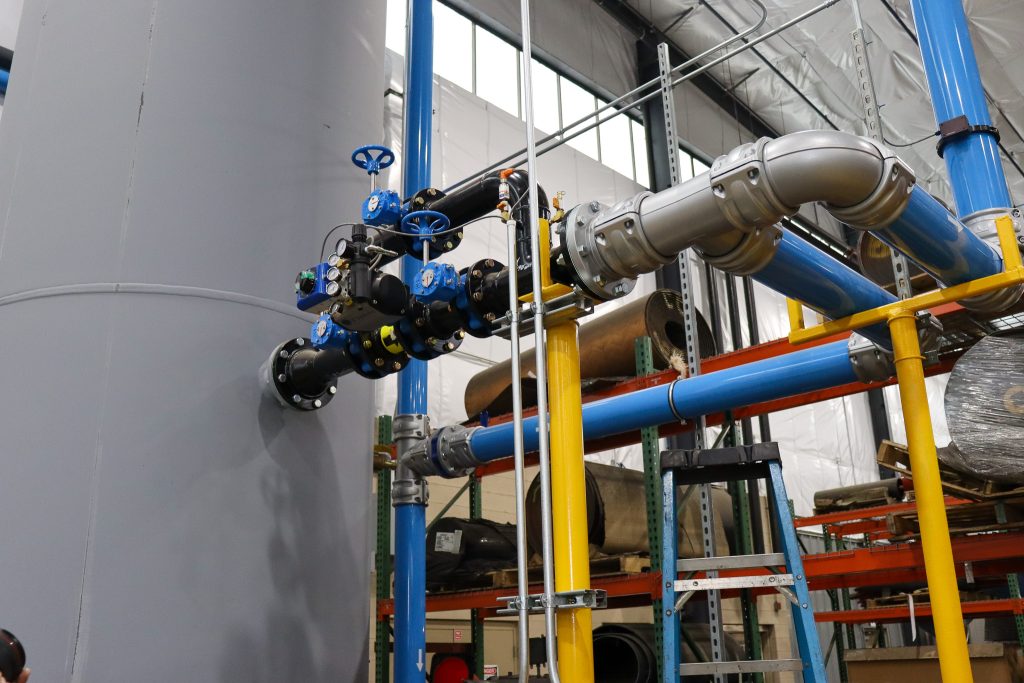
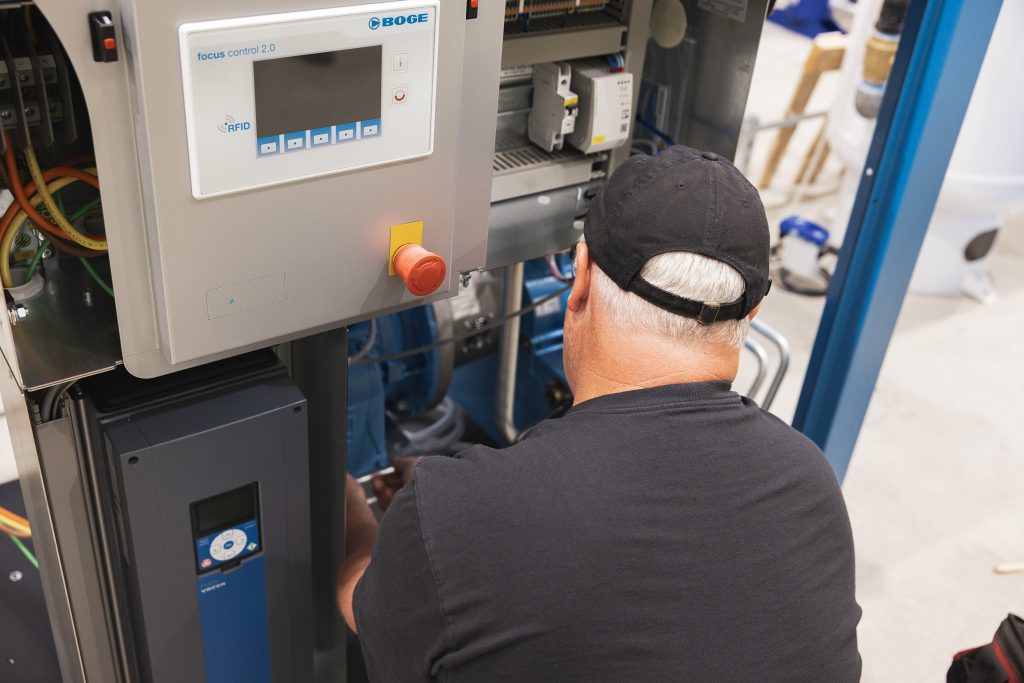
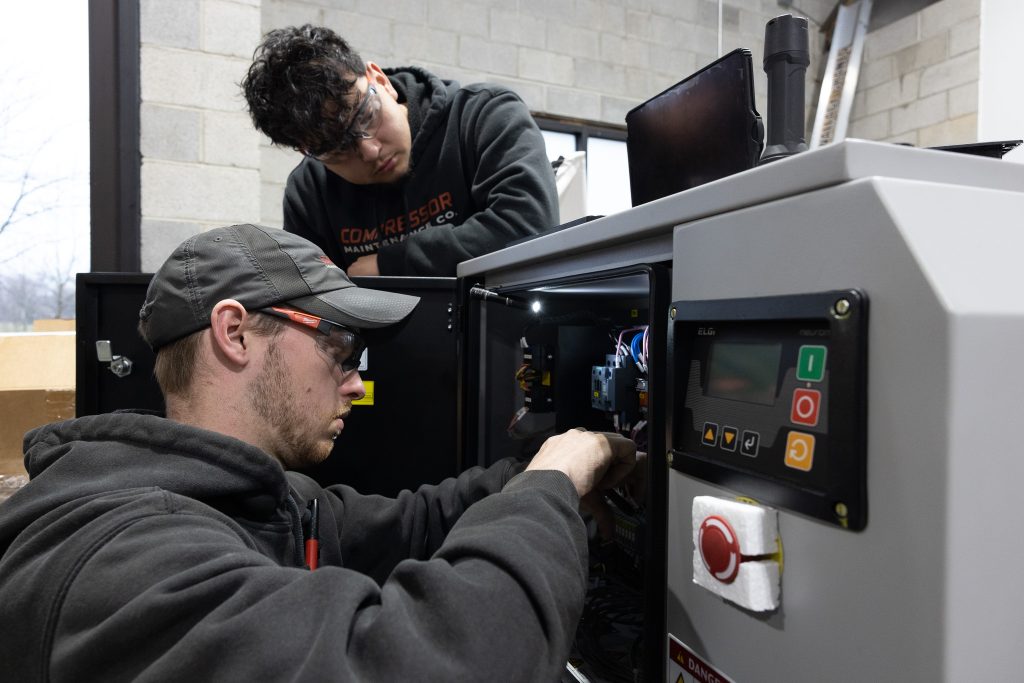
Compressed air is often treated as a plant utility because so many manufacturing systems depend on it. When pressure drops, moisture enters the lines, equipment loses air, or a compressor fails, the issue can affect production speed, quality, labor, energy cost, and maintenance workload.
A strong compressed air system helps manufacturers maintain consistent production, reduce unplanned downtime, protect tools and machines, improve air quality, support packaging and automation equipment, reduce wasted energy, and protect production schedules.
We help manufacturers review the full system, not just the compressor. That includes:
This system-level view helps CMC recommend compressed air solutions that fit the way the facility actually operates.
Rotary screw compressors support many manufacturing applications because they provide steady, reliable compressed air for continuous demand.
These compressors fit production environments where air is used throughout the day for equipment, tools, automation, packaging, and process support. When properly selected and maintained, rotary screw compressors help manufacturers support consistent pressure and efficient operation.
CMC works with suppliers such as BOGE, ELGi, Champion, and Sullivan-Palatek to support rotary screw compressor applications across manufacturing environments.
We help review air demand, pressure requirements, operating hours, service access, efficiency goals, and maintenance expectations before recommending a system.
Some manufacturing processes require compressed air with a lower contamination risk. Oil-free compressors support applications where oil carryover can affect products, equipment, or quality requirements.
Oil-free air is often important in industries such as food and beverage, electronics, pharmaceutical, medical product manufacturing, laboratory environments, packaging, and other sensitive production settings.
CMC supports oil-free compressor options from suppliers such as BOGE, ELGi, and FS-Elliott. FS-Elliott is especially relevant for large manufacturing plants and high-volume industrial applications that require oil-free centrifugal compressed air.
We help manufacturers evaluate whether an oil-free compressor is the right fit based on air quality needs, production risk, operating demand, and long-term system goals.
Reciprocating compressors support manufacturing applications with smaller or intermittent air demand.
These systems work well for maintenance areas, small shops, tool stations, light production support, and applications where compressed air is not required continuously throughout the day.
CMC helps match reciprocating compressors to required pressure, airflow, duty cycle, available space, and service needs so manufacturers avoid overbuilding the system or relying on undersized equipment.
Clean, dry compressed air protects production equipment. Moisture, oil, dirt, and particulates cause corrosion, clogged valves, product quality issues, tool wear, frozen lines, and recurring maintenance problems.
We support manufacturing facilities with air treatment equipment such as dryers, filters, separators, condensate drains, oil-water separators, and point-of-use filtration.
CMC works with suppliers such as BEKO TECHNOLOGIES, JORC, MikroPor, CAS, and Prevost to support drying, filtration, condensate management, and air quality needs.
For more on dryers, filtration, separators, and condensate management, visit compressed air treatment.
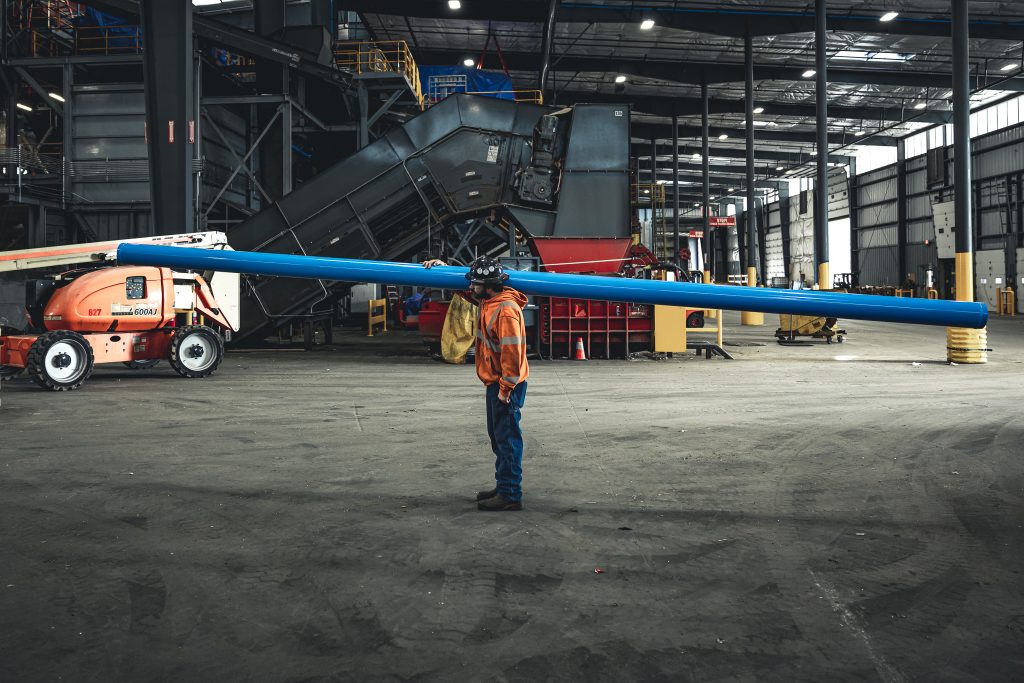
Compressed air piping affects pressure, air quality, and energy use. Even a properly sized compressor struggles if the piping system creates leaks, pressure drop, moisture problems, or restrictions.
Manufacturing facilities often need compressed air piping for production lines, workstations, tool drops, packaging areas, CNC equipment, automation systems, maintenance shops, and plant expansions.
CMC supports aluminum compressed air piping systems from Parker Transair and Prevost. These systems help manufacturers improve air distribution, reduce corrosion concerns, simplify future layout changes, and support cleaner air delivery from the compressor room to the point of use.
For more on air distribution, visit our compressed air piping systems page.
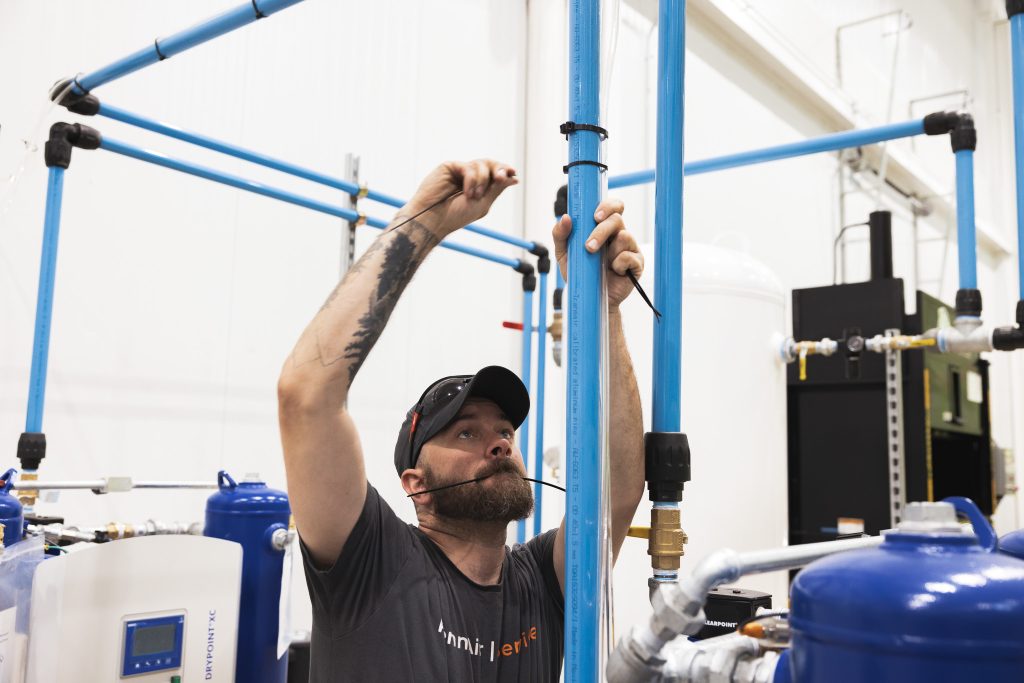
Compressed air is one of the most expensive utilities in many manufacturing facilities. Leaks, pressure drop, oversized equipment, poor controls, dirty filters, and inefficient piping all increase operating cost.
CMC provides compressed air system audits and energy audits that help manufacturers identify where air is being wasted and where improvements make the biggest impact.
An audit may review compressor performance, leak points, pressure settings, piping layout, dryer performance, filtration condition, air demand, controls, storage, and maintenance practices.
Facilities planning efficiency improvements may also benefit from reviewing available air compressor energy rebates.
Manufacturing teams need compressed air systems that run reliably around production schedules. Preventive maintenance helps reduce unexpected downtime and keeps equipment operating efficiently.
CMC provides maintenance support for compressors, dryers, filters, drains, separators, belts, couplings, lubricants, valves, and related compressed air components.
A strong maintenance plan helps manufacturers reduce breakdowns, extend equipment life, improve air quality, protect production schedules, and catch small issues before they become larger repairs.
For parts and service support, visit CMC’s compressed air service and parts page.
Manufacturing facilities change over time. New production lines, additional machines, plant expansions, process changes, and equipment upgrades all affect compressed air demand.
We support installation and expansion projects by reviewing the compressor, air treatment, piping, storage, condensate management, and service access needs before equipment is added.
Proper planning helps reduce pressure drop, prevent air shortages, improve distribution, and avoid unnecessary rework after production changes are already in place.
Some manufacturing plants need more compressed air capacity but do not have available floor space inside the facility.
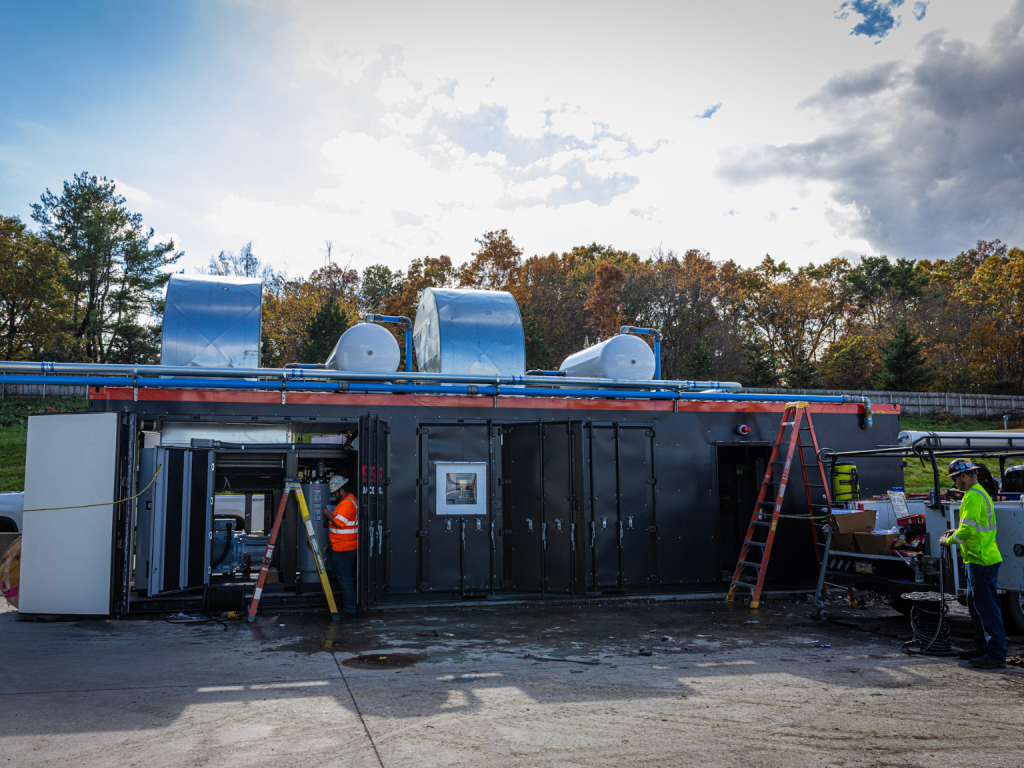
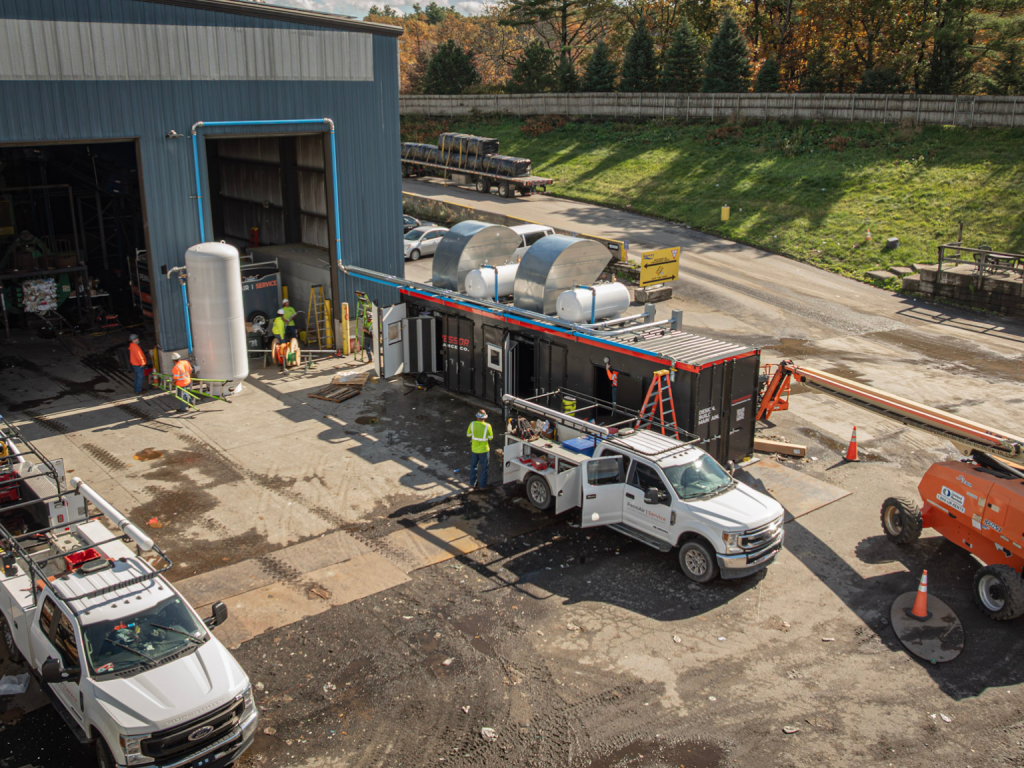
CMC supports containerized compressor rooms that place compressed air equipment in a dedicated outdoor enclosure instead of using valuable production, storage, or maintenance space inside the plant.
These outdoor compressor rooms help manufacturers add air capacity, organize compressor equipment, improve service access, and support future expansion without sacrificing interior square footage.
Learn more on our containerized compressor rooms page.
CMC works with trusted compressor, air treatment, piping, lubricant, and system suppliers to support manufacturing applications.
Relevant supplier support includes:
Manufacturing performance depends on more than compressed air alone. Through sister brands, customers also have access to support for fluid power, automation, conveyors, lubrication systems, fire suppression, hydraulic repair, and precision machining.
Through Allied Hydraulic Service, manufacturers can access hydraulic pump, motor, valve, and cylinder repair or replacement to help restore equipment performance and reduce downtime.
Through Capitol Tool, manufacturers can access precision machining, EDM, grinding, tooling, and component support for applications that require tight tolerances and dependable repeatability.
Through GreasePoint, manufacturers can access automatic lubrication systems, fire suppression, inspection services, remote lubrication monitoring, and fluid handling support for machinery, equipment, and plant maintenance needs.
Through Hanover Conveying Systems, manufacturers can access conveyor design, fabrication, sanitary conveyor solutions, washdown conveyor support, and material handling systems for production and packaging environments.
Through PennAir, manufacturers can access fluid power, pneumatics, hydraulics, process instrumentation, automation, UL508A panel shop support, air preparation, valves, filtration, and related production components.
Compressed air is used for pneumatic tools, automation, actuators, valves, CNC equipment, packaging systems, conveyors, finishing equipment, controls, maintenance areas, and process support.
The best compressor depends on air demand, pressure, duty cycle, operating hours, air quality requirements, and production needs. Rotary screw compressors support continuous demand, oil-free compressors support sensitive applications, and reciprocating compressors support smaller or intermittent air needs.
Compressed air is often called the fourth utility because many facilities depend on it like electricity, water, and gas. It powers equipment, tools, controls, and production systems throughout the plant.
Yes. Air dryers and filters help remove moisture, oil, dirt, and particulates from compressed air. This protects tools, machines, valves, piping, production equipment, and product quality.
Compressed air piping affects pressure, airflow, leaks, air quality, and energy use. Properly sized and routed piping helps reduce pressure drop and delivers air more efficiently to production equipment.
A containerized compressor room houses compressed air equipment outside the plant to save interior floor space. It helps manufacturers add air capacity without giving up production, storage, or maintenance space inside the facility.
Enough about us, let’s talk about you. Tell us about your project needs.